VAULT DWELLERS SERVED

Tuesday, February 7, 2017

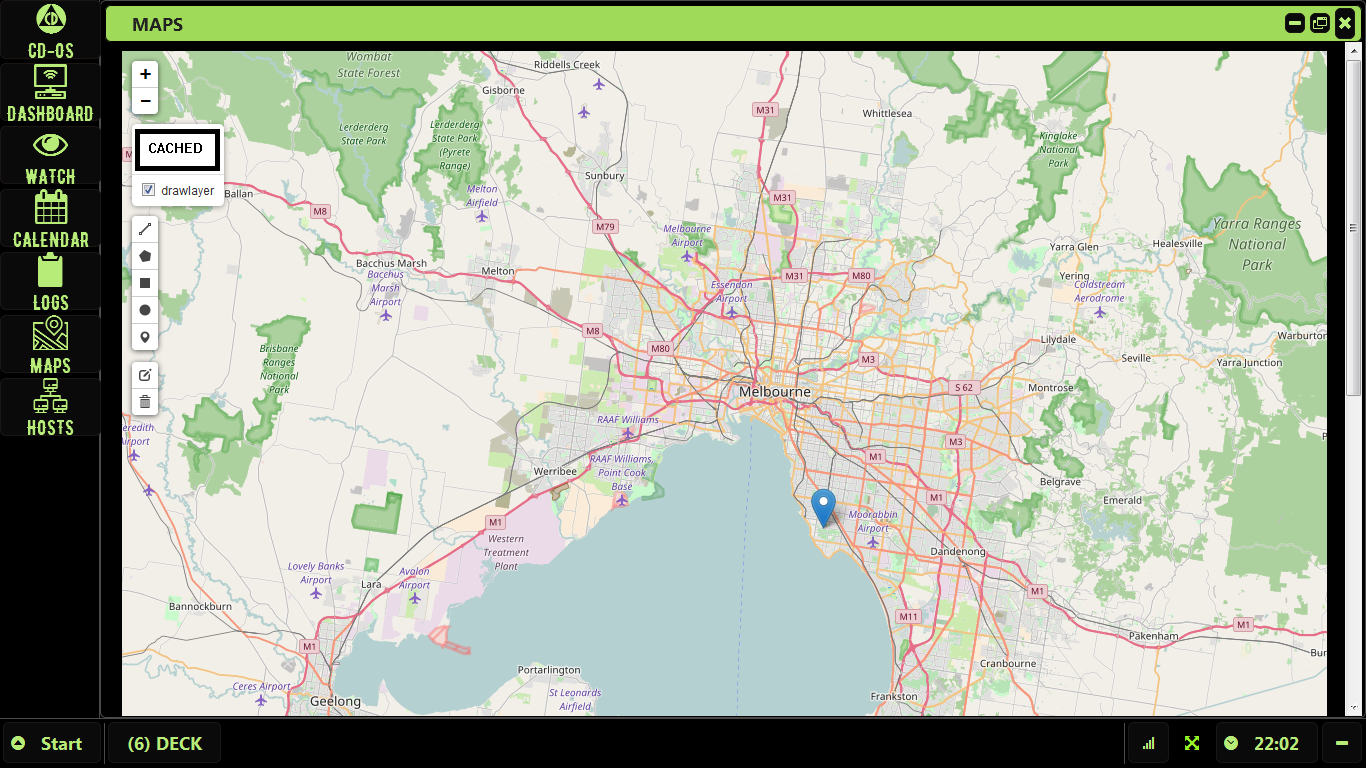
CD-OS Standalone Integrated Map Server (IE6 Compatible!)

You can't have a batcave-in-a-box without a fully integrated map server. Executable is at 1.45 MB, the entire web application still fits onto a floppy disk compressed with UPX.

The map server file is a direct export in SQLite R-Tree format of tiles from OpenStreetMap. I am hosting a database sample of tiles from just around Melbourne that is 5 megabytes resolving down to zoom factor of 18 which is enough to make out potholes. You could support the entire planet from OpenStreetMap but it may involve some path assignment to some remote folder if the map is huge and the local storage is not big enough to hold it. I was already planning to do this with UPC barcode lookups - access the reference data in a remote file path where specified. Still working out the nitty gritty details of this kind of expansion.

The drawing and notation tools all work and they were painstakingly ported from an abandoned Raphael layer editor. They are essentially a subset of Google maps at the moment but in time I will support all vector custom icons in addition to the map marker. At present you can draw a complex layer of regions, polygons and markers but it is not quite saved to GeoJson correctly, I have to add some more conversions. This is in VML fallback when SVG is not supported and looks identical on IE6, I tested it about one hour before I posted this blog.

I need a rich ability to select filter layers to turn off custom overlays of radioactive zones, contaminated areas, explored regions, looted blocks, etc. that does not exist yet. I may start with a few hardcoded ones and after some testing find a good way to add a flexible layer system the prepper can customize to his needs.

Obviously this is a terrific tool for planning journeys and designing scavenging runs to known locations. When it is all working it will support complete trip planning including supply lists and checkpoints. At some stage if I get real-time messaging working from remote clients for websockets I could send realtime tracking geolocation messages to find all your people wherever they are at present. I have been gathering information on how to receive Soviet hardened GPS and other alternatives that might survive nuclear war and this will probably be a package in it's own right.

Finally got this working. Believe it or not the REST tile server AJAX call is only about 40 lines of C code. The real intelligence is in the data in R-Tree tables that rapidly look up the correct tiles for given viewport and GPS coordinates.

I have a polyfill for Geolocation coordinates that uses the real-time ones in the device you are carrying or falls back to hardcoded data for the server station to show you where the server is running or you are browsing from.

This map server is separate from "DIAGRAMS" which is a whole batch of additional functionality supporting arbitrary floorplans and layouts with real-time markers on them. These diagrams are intended for internal use inside the shelter or layouts of the prepper retreat buildings, etc. to assist in all kinds of planning including security. Will be demoing those pretty soon.

Once I got the basic architecture sorted out, the rest of the code is falling together really quickly, almost all of it having been working at one point or another in the past.

Friday, February 3, 2017

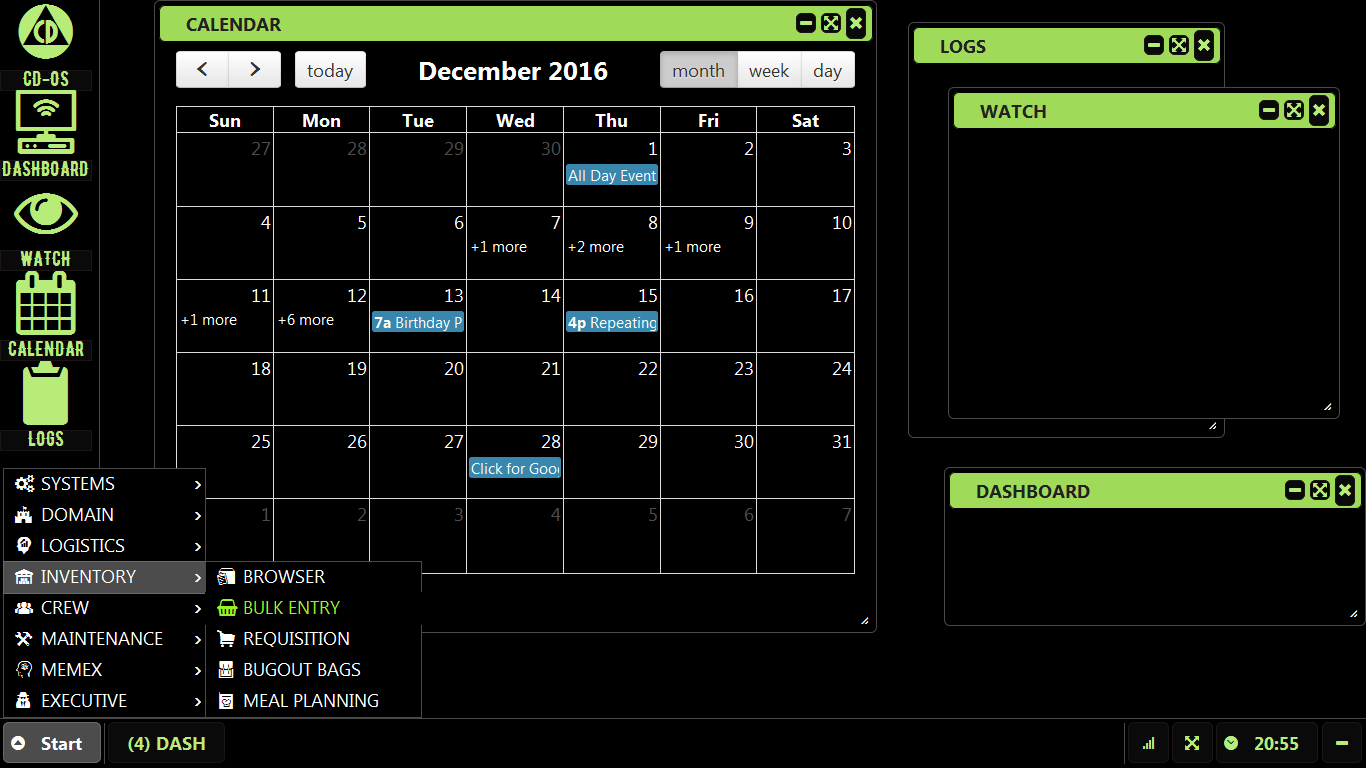
CD-OS : First New Look Screenshot 2017

This is not just a cosmetic shot. This is a sample after finishing off all the substructure of a grand windowing desktop. Believe it or not, this doesn't just run in a browser full-screen. It runs in Internet Explorer 6 with few differences with intelligent polyfills. Not visible in this shot is full real-time voice synthesizer which can annunciate all kinds of information that has been customized for this station. There are still gray areas and I have abandoned certain kinds of memory cleanup to the browser implementation. The problem with Javascript is that once loaded dynamically it remains in memory if any references remain to it in code. Hopefully my structure is seeing to it that the window contents are completely isolated from the wrapper around it to release it if the window is closed and the original script and div are erased. Otherwise this is amazing stuff to see running all asynchronously at once. What you see on screen isn't 1% of the functionality that is available. CD-OS really is a batcave in a box. A lot of the work was spent replacing all bitmaps with vectors either from a webfont file (compatible with IE 5.5) or a Raphael (VML/SVG back to IE5) image. This makes it pixel perfect no matter what device the browser is running on. I gradually realized over the last year that a lot of people would want to walk around with their mobile device managing their entire retreat/shelter/homestead and only vector drawn pictures and icons are truly portable.

The Dashboard is still underway, I have taken two stabs at it and have not decided where the user's custom data to lay it out should come from. I have a Flexbox layout that is intended to permit the user to simply decide what he wants to see from the shelter in a single window. It is supposed to have custom controls for all kinds of displays but I just have two kinds at the moment. There will be the facility for full vector SCADA controls in the dashboard but I have not gotten around to organizing them beyond the demo level yet.

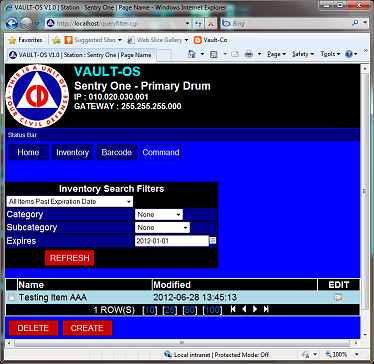
Compare with this sad story from 2010 when I was still working on the whole architecture of everything. Looks like a special needs kid threw this together for his school report :

Saturday, January 28, 2017

Awesome Mini-ITX Rig From Surplus Ammo Can


This was pretty cool. Could be waterproofed or made water resistant pretty easily. Cheap compared to many of the alternatives.

If you want to spend a lot more money you can get a pretty good looking case in a similar style here as a custom housing. I'd recommend the genuine surplus ammo can because it is tougher and comes with a rubber seal in the lid. I've picked these up for $10 or thereabouts. Mounting the screen in the face is a good idea if you mount it behind a piece of plexiglass on the inside.

It's convenient to just grab it by the handle on top and move it around without worrying a slight bump  or a jar is going to render it inoperable like a regular desktop computer. I like that idea if the computer is not intended to be mounted in place and could be relocated occasionally.

The Iceland Savonius VAWT : Definitive Post-Nuclear Model

Just about anybody could build one of these by cutting steel or PVC tubes at the right angles.

Throttling is just as important as low wind power because in order to reduce maintenance you don't want storms tearing it down every time you get a 300 mph wind up there.

I have not got around to it yet on my list of projects but building a housing for one of these has been on my TO-DO list for years. A cage designed to keep people from vandalising it topside. Will be building at least one of these to go on the roof for testing in 2017.

Friday, January 27, 2017

Shelter Business Booming

Never better, even the left starts to get it.

They instinctively know that if the NWO isn't getting it's way with the soft kill option they will move to the hard kill option. It is a sign of how crazy they are that nobody has to explain this to them.

Matrix moment - Mind Blown - Full Red Pill

Apparently the measles "virus" has never been identified, cultured, isolated or even given a nomenclature according to well tested descriptive features.

Is measles in fact a contagious bacterium? If so, the vaccination would not work ... ever. Even according to the theory offered by the pharmaceutical companies.

Thursday, January 26, 2017

CD-OS Networked Now On 9 Development Devices

I love this machine. It got bashed up, thrown into boxes,
stuffed into a bag, fell off countertop and accidentally
reversed polarity on the power supply and it has never
failed to boot up instantly and run like a champion.
I have the web server compiling on 9 targets as of last night. It compiles and runs on DOS-32, Desqview-X, Basic Linux, Windows NT Embedded, Win98SE, Windows 2000, Windows XP SP3, PC-BSD, HP-UNIX and Orange PI ARM Linux. With a bit of browser shuffling the web desktop looks the exact same on every platform including the most recent HTML5 features provided by Polyfills. All devices read and write to a Samba repository shared folder where the source code is maintained by FossilSCM. (MS Lan Manager provides this network share under DOS) When I tried this back in November it became obvious then that the desktop did not look correct under old browsers and older browsers are a big factor in the design of CD-OS. I want to support Mom'n'Pop amateurs who buy $1.00 thin clients off EBay that come with IE6 installed. (That's why they cost a dollar)

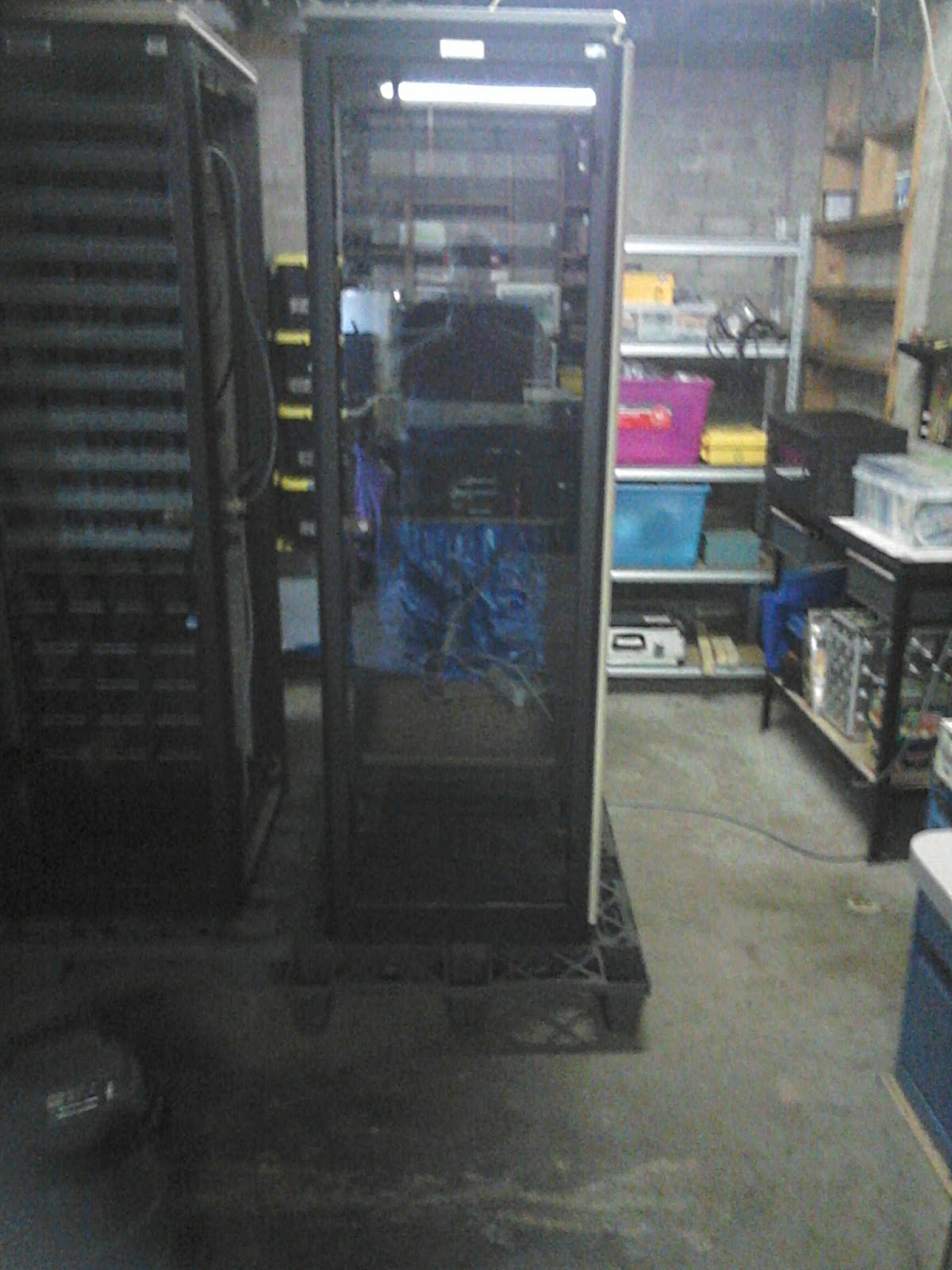
Carrying these server cabinets
 down into the current shelter was not easy.
In December I once again refactored the way my SPA (Single page application) works and replaced my existing display code with something much better called "Simone" to create the dynamic desktop. Then I overwrote the JQuery-UI bitmap based display library CSS with all vector images and used that new theme to alter the Simone appearance to get the Green VDT Fallout Pipboy lookalike I have now. It is absolutely fantastic. The UI in full screen mode looks like a real OS.

The "Simone" library has so many advanced merits I don't even know where to start, compared to the code I was using before. It is half the size of the desktop code I had hacked together before. One of the features that is really attractive is the capacity to change font sizes for all display items on-the-fly, which means it can be made readable on any device it is running on whatever the screen resolution. It can adapt to window size without all the overhead of glutted libraries like Bootstrap.

Screenshots coming in the next week, still doing some coding on the underlying framework. I had audio cues and media playback (HTML5 style) working on IE6 in a thin client and it was wonderful, seamlessly identical to the browser display in Firefox and Opera on Windows 7.

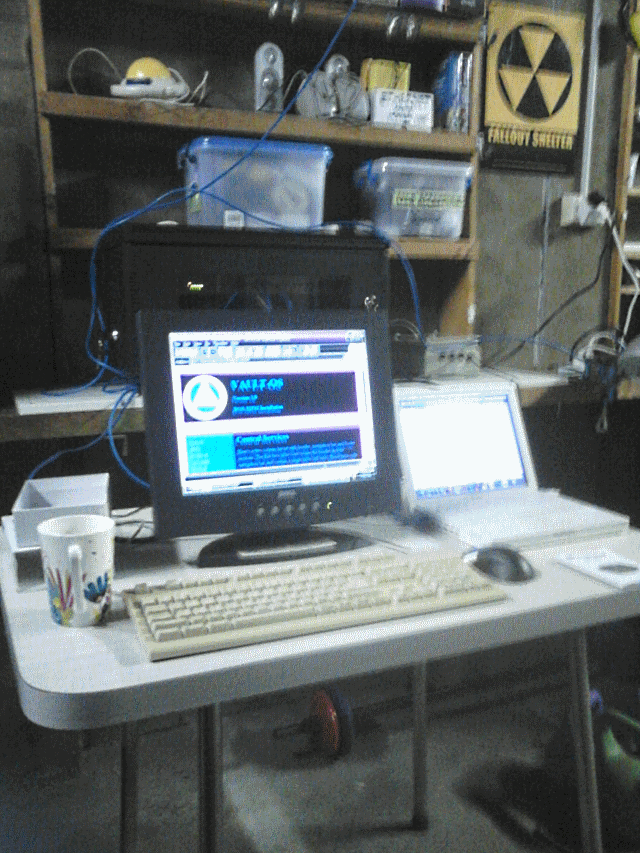
This is good for working side-by-side. I program and
compile on the left on Windows NT embedded and
then test the server with the Safari browser on
the right running on a G4 PowerPC. You could
not pick an odder couple and the browser should
display the same interface no matter what it is running on.
Been experimenting with the ESpeak voice synthesis library in Javascript to see if it can use the fallback polyfill even on ancient browsers! May have the option on server to load this library into a hidden IFrame and then call it for real-time voice synthesis on 20 year old browsers!!!

Monday, January 23, 2017

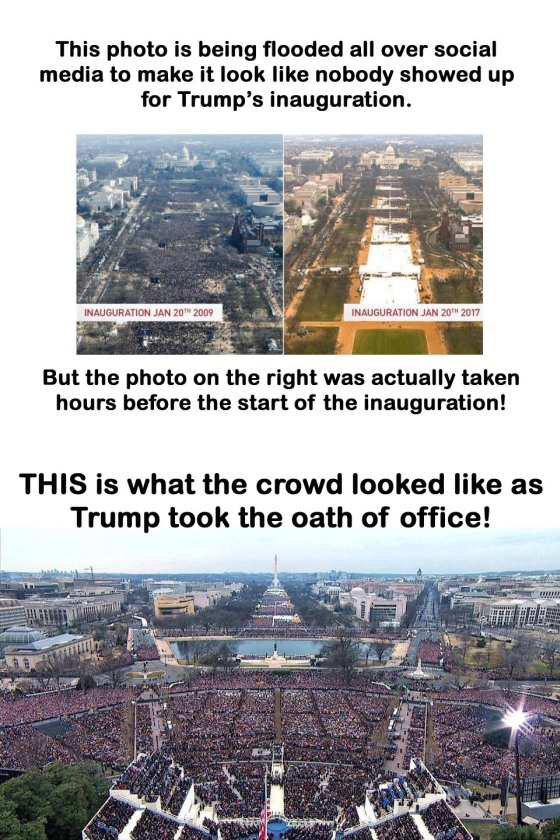
Fake News Photo Trickery - Seeing is Not Believing!


LARGEST INAUGURATION CROWD IN U.S. HISTORY!!!
(What is this, the Soviet Union in 1950?!? The media LIES!!!!)